ADHD Awareness Month: Understanding ADHD Types
ADHD affects an estimated 366 million people worldwide, including many right here in Minnesota. This ADHD Awareness Month, we’re highlighting the importance of understanding and supporting individuals with ADHD across all ages. Awareness helps reduce stigma and opens doors to compassion and connection.
At FastTrackerMN.org, we believe that embracing neurodiversity strengthens our communities. By learning more about ADHD and the resources available, we can help build a world where every person has the support they need to thrive. Together, let’s continue advocating for inclusion, understanding, and equitable access to mental health care.
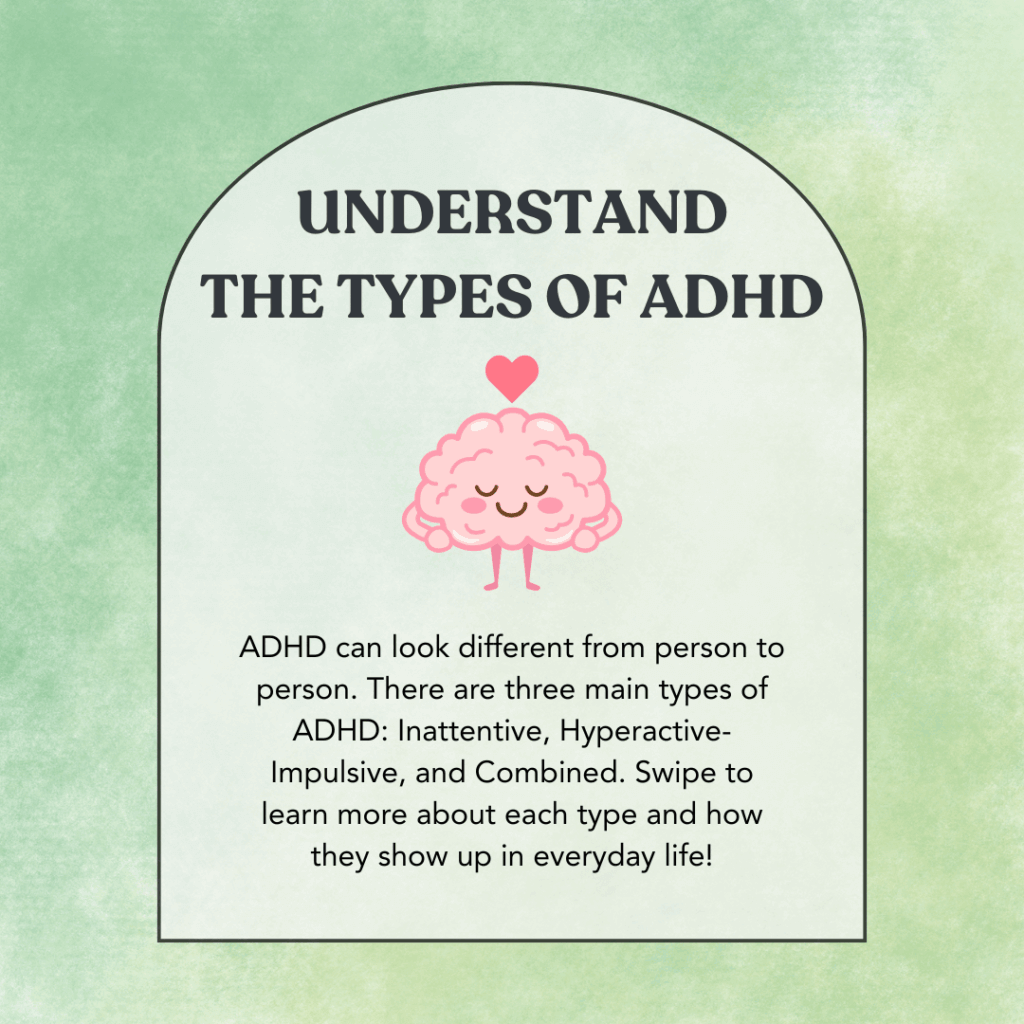
Understand the Types of ADHD
ADHD can look different from person to person. There are three main types of ADHD: Inattentive, Hyperactive-Impulsive, and Combined. Learn more about each type and how they show up in everyday life!
Inattentive ADHD
May look like:
- Easily distracted, miss details, and often appear to be daydreaming or moving slowly
- Gets bored quickly and has trouble focusing on one task at a time
- Struggles to organize thoughts, tasks, and new information
- Frequently loses items like papers, pencils, or other materials needed for work
- Has difficulty following directions or completing tasks accurately
- May seem unable to listen or take in information as quickly as others
Hyperactive-Impulsive ADHD
May look like:
- Often fidgets, squirms, or feels restless and has trouble sitting still
- Talks frequently and may blurt out answers or comments impulsively
- Seems constantly on-the-go or driven by internal restlessness
- Acts without thinking, showing impatience, or interrupting others
- Experiences racing thoughts that make it hard to slow down or stay focused
- Struggles to engage in quiet or calm activities
Combined ADHD
May look like:
- Includes symptoms of both inattentive and hyperactive- impulsive
- Behaviors occur more frequently and severely than in people without ADHD
- Often interferes with daily functioning at home, school, work, and social settings
- Symptoms and intensity can change over time and look different in kids vs. adults
- Can look different based on gender; women are more likely to be diagnosed later
- Having combined type ADHD does not mean that it is more severe
ADHD VS. ADD:
The term ADD was used to describe people who had trouble focusing but weren’t hyperactive. Today, doctors no longer use ADD as an official term. All attention related challenges are now called ADHD. What was once called ADD is now known as ADHD Inattentive Type.
You are not alone
Remember that you are not alone. Together, we can build a community that values neurodiversity, supports individuals, and ensures everyone has access to the care they need.
This information is for educational purposes only. If you think you may have ADHD, consider reaching out to a licensed mental health provider. Search the keyword “ADHD” on FastTrackerMN.org to find real-time mental health and treatment options near you in Minnesota.
Check out our ADHD Posts on our social media!